
Guest Authored by Gus Curtin, Wide Format Specialist, Mid-Atlantic Region at Lindenmeyr Munroe.
With so many adhesive vinyl products available, choosing the right material for a graphics application is not always as straightforward as it may seem. Film type, adhesive technology, durability, and installation characteristics can vary significantly from one product to another.
The performance of an adhesive graphic depends heavily on where it is being installed, how long it needs to remain in place, and what will be expected of it throughout its lifecycle. A product that performs exceptionally well for one application may be completely unsuitable for another.
At Lindenmeyr Munroe, we work with our customers every day to help match materials to real-world applications. Asking the right questions before selecting a product is crucial to successful printing and installation. Installation delays, reprints, and failures are expensive, embarrassing, and can degrade end-user satisfaction.
These conversations should be part of the manufacturer-distributor-printer-end user communication chain because projects are frequently constrained by time, budgets, availability, weather, or other factors. The best answer to any of these questions may not always be feasible, so everyone should understand the tradeoffs between choices and select the material that best supports the key success factors.
Here are five questions to consider before choosing an adhesive vinyl.

1. What Surface Will the Graphic Be Applied To?
The application surface should be one of the first considerations when selecting any adhesive vinyl.
Smooth, flat surfaces such as glass, metal, and certain plastics, commonly called high-energy surfaces, are generally easier to work with, while textured walls, brick, concrete, and other uneven surfaces may require a more aggressive adhesive. Even surfaces that appear similar can behave differently depending on their finish, coating, porosity, and surface energy.
Painted walls are a good example. Paint type, age, finish, and condition can all affect how well an adhesive bonds. Low-VOC and certain washable paints can be particularly challenging, as can surfaces that have not fully cured, making testing an important part of the process. A restrictive deadline that eliminates the possibility of testing will generally mean using a more aggressive adhesive to help ensure a successful installation, but that could result in a more complex removal process later.
Plastics can also present challenges, particularly low-surface-energy materials that are naturally more difficult for adhesives to bond to.
It is important to consider not only the material to which the graphic will be applied, but also how that surface exists within its environment. A floor graphic has different considerations than an elevator door. An interior window does not pose as many challenges as an exterior window that gets a lot of sunlight. A garage door at street level comes in contact with more variables than a mural ten feet off the ground.
Before selecting a product, identify exactly what the graphic will be applied to, consider the surrounding environment, and, when possible, test the material on the actual surface.

2. How Long Will the Graphic Be Displayed?
A graphic needed for a weekend promotion has very different requirements from one expected to remain in place for several years.
Short-term applications often prioritize speed, ease of installation, and clean removal. Retail promotions, event graphics, seasonal campaigns, and temporary signage may only need to perform for days, weeks, or months. Depending on the print method and application, many short-term projects may not require an overlaminate.
Longer-term applications typically require greater durability from the film and adhesive, particularly when graphics will be exposed to changing environmental conditions. For long-term projects, best practices generally call for an overlaminate to maximize the life of the graphic and maintain its appearance over time.
Floor graphics are a great example of this. One-step materials like Drytac’s SpotOn® Floor 200 are great choices for short-term floor promotions, wayfinding, and safety messaging where easy installation and speedy removal after a brief period take precedence. For a more permanent display, a two-step system using Drytac’s Polar® Grip protected by a slip-rated overlaminate, such as Drytac’s Interlam™ Pro Emerytex®, provides additional protection for the print while allowing the underlying print material to be selected based on the floor surface.
It is also important to consider whether the expected lifespan of the graphic matches the manufacturer’s recommended durability for the product. Using a longer-term product for a temporary application is not always necessary, while expecting a short-term film to perform for years can create avoidable problems.
Defining the intended lifecycle upfront helps narrow the material options considerably.
3. Will the Graphic Be Installed Indoors or Outdoors?
Indoor and outdoor graphics face very different conditions.
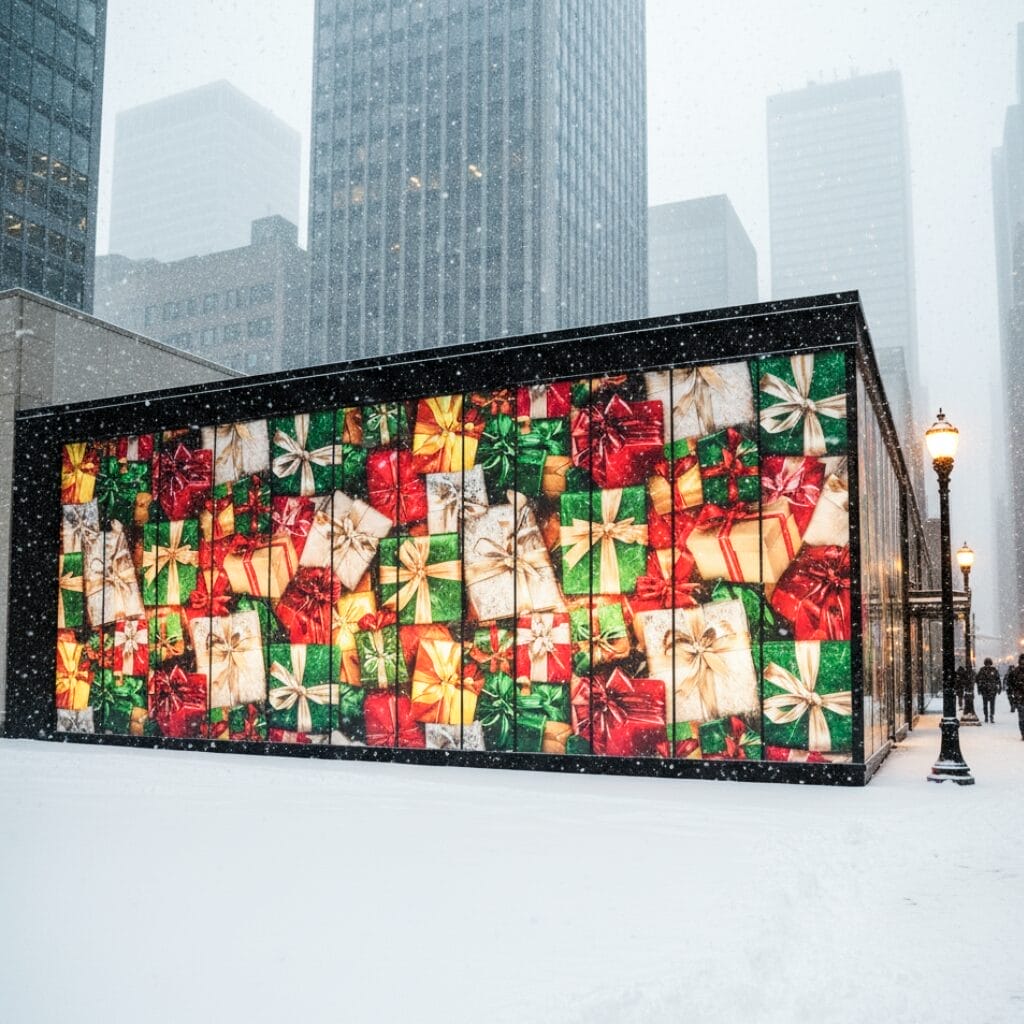
Indoors, graphics may be protected from weather but still need to withstand cleaning, customer interaction, temperature changes, and other environmental factors. Applications in retail stores, offices, restaurants, schools, and public spaces can also have specific requirements relating to fire performance, slip resistance, and other certifications.
Outdoor graphics must contend with a broader range of conditions, including UV exposure, rain, wind, humidity, and significant temperature fluctuations. Depending on the application, the material may also need to withstand abrasion, cleaning, and other physical contact.
Just as important is the temperature at the time of installation. The temperature a graphic can withstand once installed is not necessarily the same as the minimum temperature at which it can be successfully applied.
Many pressure-sensitive adhesive products require installation within a specific temperature range to achieve a reliable initial bond. If graphics need to be installed outdoors during colder months, material selection becomes especially important. Only certain adhesive-backed vinyls are designed and rated for cold-weather installation.
This should be confirmed before arriving on site. Choosing a film based only on its service temperature or outdoor durability, without considering its minimum application temperature, can result in poor initial adhesion and premature failure.
The location itself matters too. A sheltered exterior wall is very different from a vehicle, an exposed sign panel, or a surface receiving direct sunlight throughout the day.
Understanding the complete environment, including both installation conditions and conditions throughout the life of the graphic, is key to selecting the appropriate film, adhesive, and, where necessary, overlaminate.

4. Is Easy Removal Important?
Removal is sometimes treated as an afterthought, but it should be considered before the graphic is installed.
For promotional graphics, seasonal campaigns, retail displays, event branding, and other temporary applications, clean removal can be just as important as initial adhesion.
A permanent adhesive may provide excellent bond strength, but that does not necessarily make it the best choice when the graphic needs to be removed or replaced regularly. Removable and repositionable adhesive technologies can make changeouts faster while reducing the risk of adhesive residue or damage to the underlying surface.
The expected removal timeline should also be considered. A film designed to remove cleanly after several months may perform differently if left installed for several years.
Thinking about the end of the graphic’s lifecycle at the beginning of the project can save significant time and labor later.

5. How Easy Does Installation Need to Be?
Installation requirements can have a major impact on material selection, particularly for large projects or multi-location rollouts.
An experienced professional installer may be comfortable working with a traditional pressure-sensitive adhesive, while graphics being installed by retail employees or other non-specialists may benefit from technologies designed to simplify application.
Air-release adhesives can help installers work air out from beneath the graphic and reduce bubbles during application. Repositionable adhesives provide greater flexibility during placement, while dot-pattern adhesive technologies can make certain short-term graphics especially easy to apply, reposition, and finish successfully.
The size and complexity of the graphic should also be considered. Installing a small decal is very different from applying a full-height wall graphic or large window display.
For projects involving dozens or hundreds of locations, choosing a material that installs quickly and consistently can also create meaningful labor savings and help deliver a more uniform finished result.
It is important for the end customer to understand that their brand, promotion, or campaign effectiveness can be significantly impacted by the installation. Some projects may be best served by achieving the greatest possible coverage. If graphics will primarily be viewed from a distance, getting more graphics installed may be more important than achieving a flawless installation at every location. Other projects involving high-value items or brand-critical messaging may require a material that gives installers, professional or otherwise, the best opportunity to produce a beautiful, finished graphic.

Choosing the Right Material for the Application
There is no single adhesive vinyl that is right for every job. The best choice is the product that most closely matches the requirements of the specific application.
Surface, duration, environment, removability, and installation all work together. Understanding these factors before production begins makes it much easier to select a material that will install properly, perform throughout the required lifecycle, and remove as expected.
This is also where working with an experienced distributor and material manufacturer can make a difference.
Lindenmeyr Munroe works closely with print service providers to understand the complete application before recommending a solution. Through partnerships with manufacturers such as Drytac, customers have access to a broad range of adhesive technologies designed for different surfaces, environments, and installation requirements.
Drytac’s portfolio includes easy-to-install SpotOn® products, removable and repositionable ReTac® films, and Polar® products developed for more demanding applications. Many products within the Polar range are also designed with lower minimum application temperatures, providing options for graphics that need to be installed in colder conditions.
With solutions available for windows, walls, floors, retail displays, general signage, and outdoor applications, selecting the right product starts with understanding the job.
Ask the right questions at the beginning, check the product specifications, and test on the actual application surface whenever possible. Those steps can make the difference between simply choosing an adhesive vinyl and choosing the right adhesive vinyl.


